I've sold over $250,000 of 3D-printed products on Etsy from a single store. I've also analysed thousands of other listings to figure out why some sellers clear €2,000/month from the same printer that earns someone else €30. The difference isn't talent and it isn't luck. It's a small set of decisions made early.
If you're trying to make money 3D printing, you're going to make most of the money you'll ever make from maybe one or two products. The whole question is which products and how you sell them. Everything below is built around that.
WHAT MOST PEOPLE GET WRONG
Most posts on making money with a 3D printer start with "buy a printer, list on Etsy, profit." That's not a plan, that's a hope. Here are the four mistakes I see kill 80% of new 3D-print sellers in their first three months:
- Picking a saturated product. A generic phone stand has 40,000–70,000 Etsy listings competing for the same buyer. You'll be on page 9 forever.
- Ignoring copyright. Disney, Nintendo, Marvel and Pokémon listings get pulled by Etsy's automated IP enforcement and can suspend the entire shop. Search volume isn't worth a ban.
- Underpricing print time. A 6-hour print sold for €12 with €4 in filament earns you about €1.30/hour after Etsy fees. That's not a business - that's a hobby that costs you money.
- Skipping niche research. "Cool things you can print" is a content category, not a market category. Buyers search for problems they have, not products to admire.
Get any one of these wrong and you'll spend three months wondering why nobody clicks your listings. Get them right and a single hobby printer can comfortably clear €500–€2,000 per month.
The single most useful thing you can do before starting: validate your idea against real Etsy data before you print anything. Search volume, competitor count, average price, IP risk and required certifications all matter. Our free idea validator runs the same six checks I use, in 30 seconds.
THE SEVEN PROVEN MODELS THAT ACTUALLY MAKE MONEY
There's no single way to make money 3D printing. There are about seven, and the most painful mistake new sellers make is mixing them up. Here are the ones that consistently work in 2026, ranked roughly by how achievable they are starting from one printer.
1. Replacement & exact-fit parts
The highest return-per-gram-of-filament I've ever seen comes from boring functional parts: a Dyson accessory holder, a KitchenAid tool clip, a discontinued Little Tikes wheel cap. Buyers searching for "exact fit replacement" are motivated, urgent and price-tolerant. Listings face near-zero competition because mass manufacturers don't make these parts anymore.
Average margin: very high. Print time: usually under 2 hours. The downside is finding the niche - you have to actually know what's broken in someone's house.
2. Personalised gifts
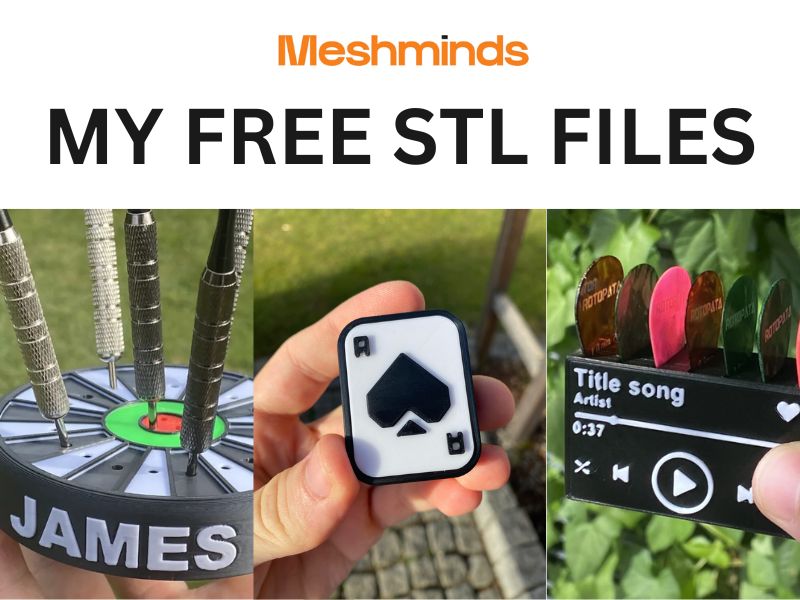
Personalisation is the single most consistent conversion driver on Etsy. A "name sign" with someone's child's name converts at roughly 2–3× the rate of the same product without engraving, and you can charge €5–10 more for the work. Buyers in this category are gift-buyers, not utility-buyers - they're emotional, repeat customers, and they tell their friends.
Examples that consistently scale: custom name signs, engraved phone stands, personalised pet bowls, baby-name plaques, wedding-favour batches.
3. Premium decor with a design story
Brands like Wooj, Crème Atelier and Sheyn sell 3D-printed lamps and vases for €100–€350 by leading with design intent - the printer is invisible in their marketing. They aren't competing on print time; they're competing on aesthetic and story. This is harder than it looks (you need real design taste), but it commands premium prices and builds a brand that compounds.
4. Tabletop gaming accessories
The DnD market is passionate, technically savvy and willing to pay €40–€80 for a clever dice tower or original character mini. Avoid Wizards-of-the-Coast IP and dragons (saturated and increasingly enforced). Lean into mechanical design - articulated dice rollers, themed dice towers, original creature minis - where most competitors can't easily copy you.
5. Niche functional B2B
One B2B order can equal a month of Etsy sales. Find a small-volume niche where injection-moulding doesn't make economic sense and 3D printing fits perfectly: short-run promotional items, custom enclosures for makers, brewery tap handles, retail prop. The catch is sales - you have to email, call and pitch.
6. Designer / digital files (STL sales)
If you have CAD skills, selling STL files on Cults3D, MakerWorld Boost, Patreon or Gumroad is the highest-margin model in 3D printing - every download is pure profit, no filament cost, no shipping. The bar to design something good is real, but the model scales infinitely once it works. Hero Forge is the platform extreme of this - software is the product.
7. Service bureau / print farm
This is the model that requires the most capital, but companies like Slant 3D (1,000+ printer farm) and Wigglitz (~2,700 Bambu Lab X1Cs, $18M revenue 2025) prove the ceiling is enormous. You don't start here - you graduate to it once you've already proven a product.
HOW MUCH CAN YOU REALISTICALLY MAKE?
Honest brackets, based on hundreds of sellers I've benchmarked or worked with:
- €0–€100/month: 80% of new sellers. Wrong product, wrong listing, wrong photos. Three months in, most quit here.
- €200–€800/month: Hobby printer + one or two well-chosen products + decent photos. Genuinely achievable in 2–3 months if you skip the obvious mistakes.
- €1,500–€5,000/month: A real side hustle. 4–8 SKUs, 1–3 printers, basic ad spend, photo skill. 6–12 months of compounding.
- €10,000+/month: A small business. Multiple printers, hired help (or extreme automation), a brand. 2+ years of focused work.
- €100K+/month: The Wigglitz / CruiseCup tier. Requires either viral content as a marketing engine or significant B2B distribution.
The big jump is between bracket 1 and bracket 2. That jump is almost entirely product selection. Once you're in bracket 2, you can iterate your way up.
Validate your idea before you print
Paste any MakerWorld, Printables, Cults3D or Thingiverse link - or describe the idea - and we'll score Etsy demand, profit, and IP risk in 30 seconds.
Try the free validator →THE NUMBERS BEHIND A €250 / MONTH PRODUCT
Quick worked example so you can see how the maths works in practice. Take a personalised name sign listed at €18 with €3 of PLA at €0.025/g for ~120g of plastic.
- Sell price: €18
- Etsy fees (~12% all-in): –€2.16
- Filament cost: –€3.00
- Failure rate (6%): –€0.18
- Net per unit: ~€12.66
- 20 units/month → €253/month on a 4-hour print
A single Bambu Lab X1C running 16 hours a day is enough to comfortably handle 4× that volume. The constraint is rarely production - it's always demand. Which brings us back to product selection.
WHAT TO DO THIS WEEK
If you're serious about making money with your 3D printer, here's the realistic 7-day starter plan I'd give a friend:
- Pick three product ideas. Don't fall in love with one yet. Variety hedges against bad data.
- Run each through a real-data validator (ours is free) - focus on the demand-to-supply ratio and the IP risk score.
- Pick the best one. Highest score, lowest IP risk, niche you actually understand.
- Print one finished sample. Sand it. Photograph it on a real surface, in real light, in context.
- Open an Etsy shop. 15 minutes. Add 8–10 photos, a keyword-rich title (pattern: [keyword] | [variant] | [buyer]), and tags pulled from your top three competitors' listings.
- Wait two weeks. Don't tweak constantly. Look at views and conversion after 14 days.
- Iterate or kill. <50 views = title problem. 200+ views, 0 sales = price or photo problem. Sales = duplicate as variants.
That's it. That's how most successful 3D-printing businesses I know got started - pick one good product, ship it, iterate from real data. Everything else (a second printer, ads, your own shop, social media) compounds after the first product is working.
THE PART NOBODY TELLS YOU
The biggest psychological obstacle to making money 3D printing isn't the printer or the marketing. It's the gap between how cool a print looks coming off the bed and how hard it is to make someone else want it. Pretty prints don't sell - solved problems sell. Personalisation sells. Identity sells. Functional fits sell.
Most makers get into this because they love the tech. The ones who actually make money learn, sometimes painfully, to fall in love with the customer instead.
Pick a product where someone is already searching for what you're making. Validate it with real data. Print one polished sample. Take real photos. Ship it. Repeat with what worked.
That's the whole game.